Most manufacturing organizations do not realize their systems are limiting performance until the impact becomes difficult to ignore.
Scalability problems rarely appear as a single failure. Instead, they surface gradually through friction, delays, and rising operational effort. Because these issues emerge over time, teams often adapt instead of addressing the root cause.
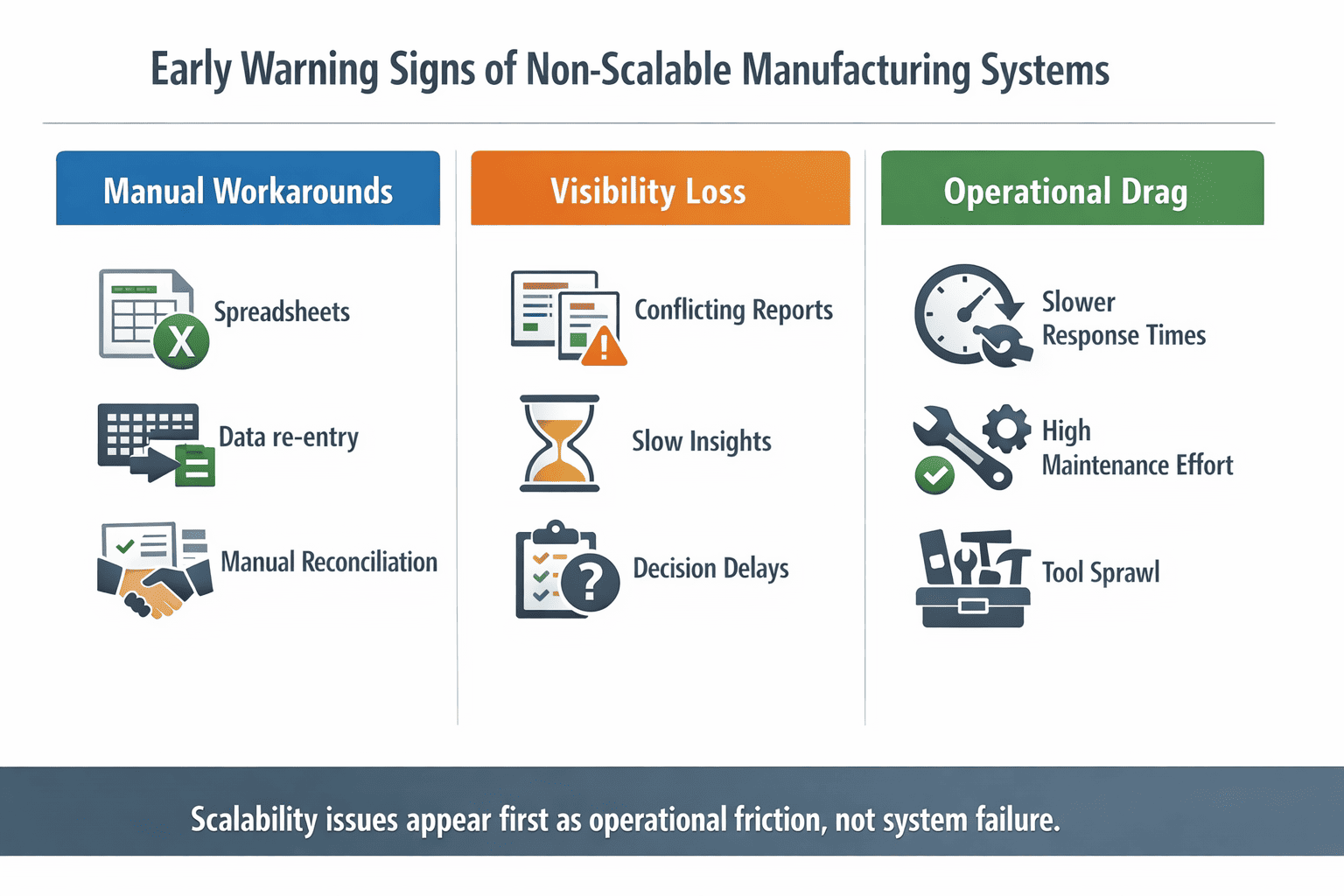
Manual Workarounds Become the Default
One of the earliest indicators is the growing reliance on manual workarounds.
Teams begin exporting data into spreadsheets to reconcile information between systems. Reports that should be available on demand require hours or days of cleanup. People spend time validating numbers instead of acting on them.
This pattern signals that systems are no longer supporting the workflow. People are filling the gaps instead.
According to McKinsey, employees spend up to 20% of their time searching for and reconciling information when systems are fragmented and poorly integrated. That lost time compounds as organizations scale.
| When spreadsheets become the system of record, scalability is already compromised. |
Declining Visibility for Leadership
Another clear sign is declining operational visibility.
Leadership struggles to answer basic questions quickly:
-
What is current production performance
-
Where delays are occurring
-
Which customers are impacted
-
How inventory and demand are changing
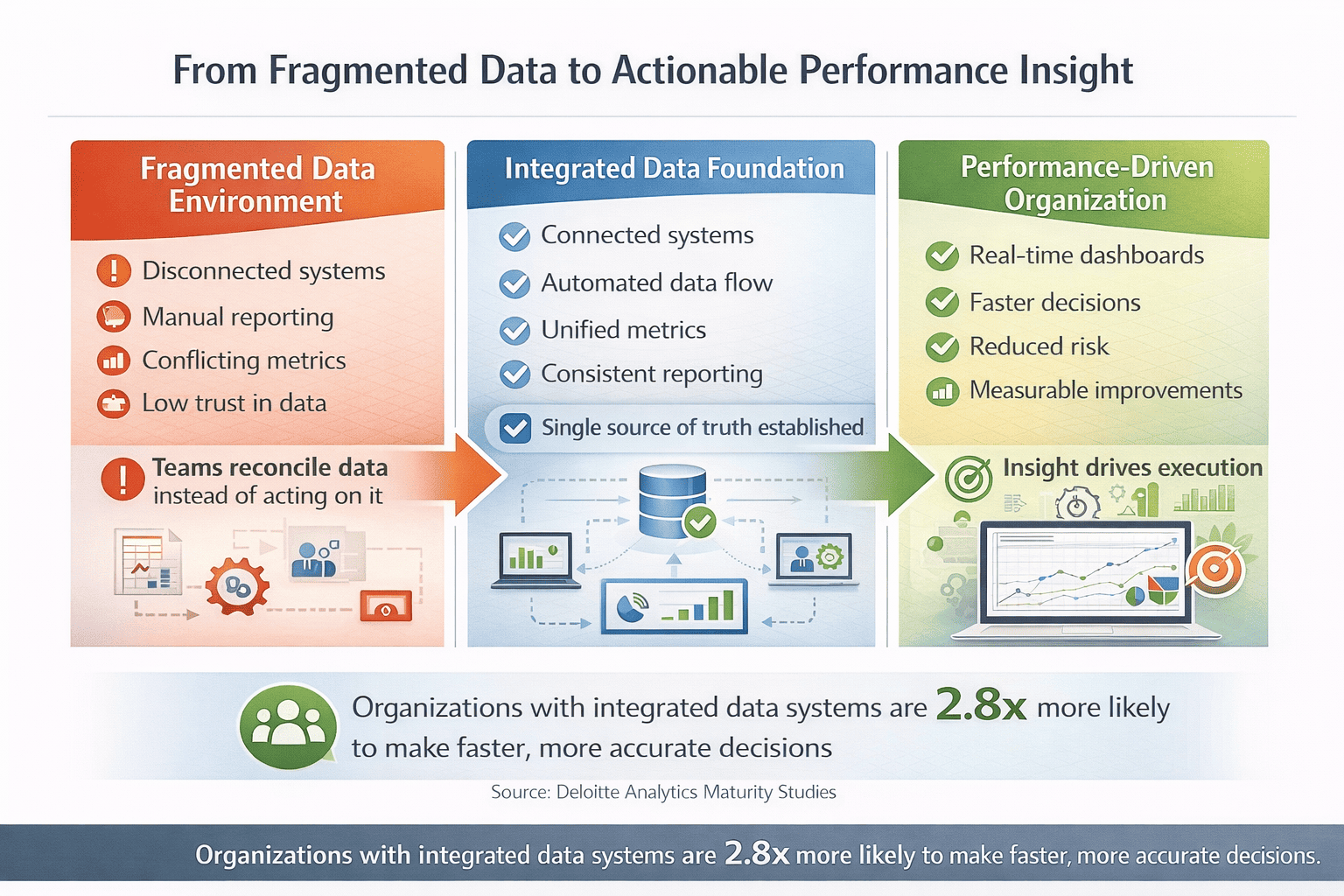
When data lives across disconnected platforms, teams spend more time verifying accuracy than using insights. Decisions slow down because no one is confident in the numbers.
Deloitte research shows that organizations with poor data integration are significantly more likely to delay operational decisions due to uncertainty around reporting accuracy.
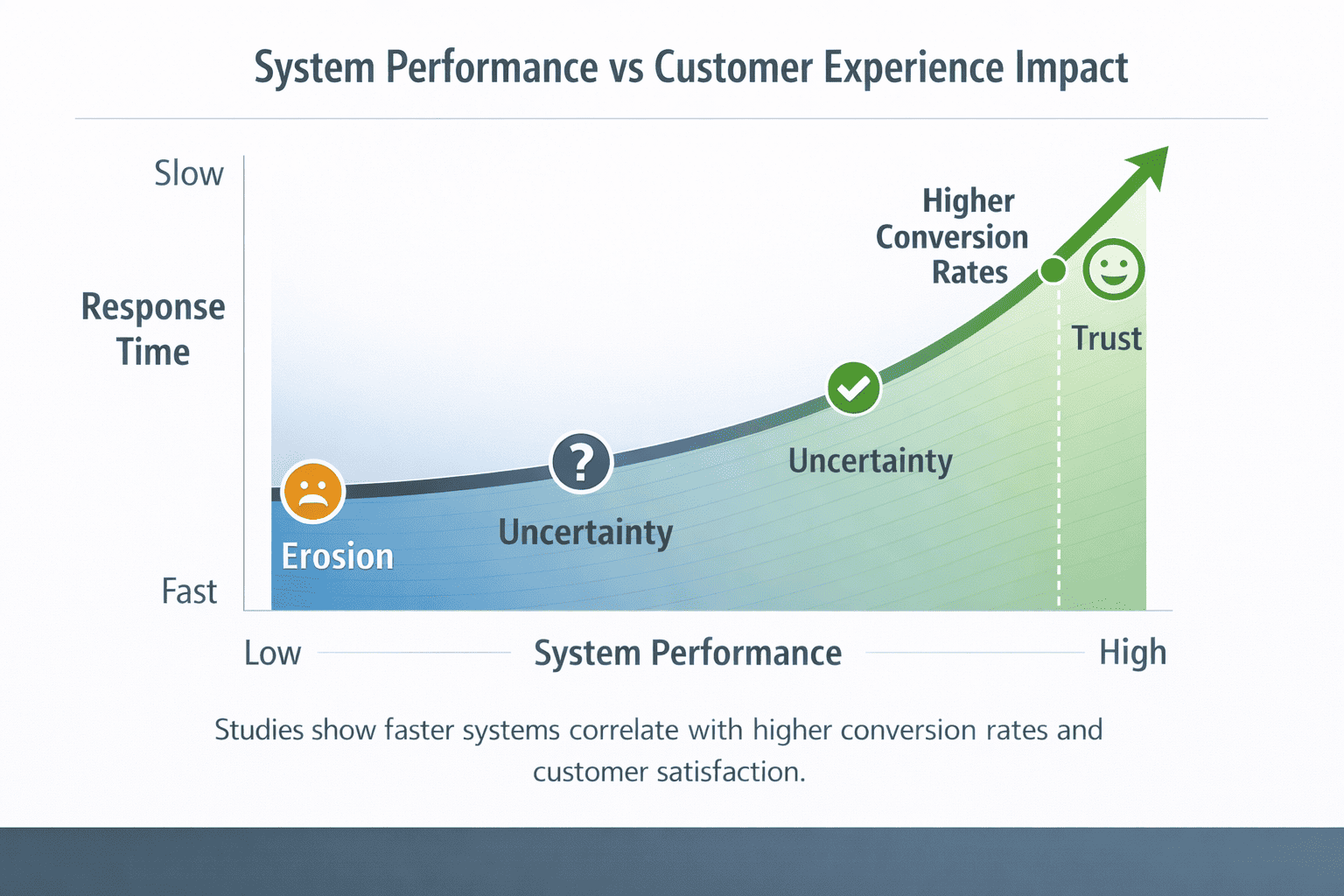
Slower Response Across Operations and Customer Touchpoints
As systems strain, responsiveness suffers.
Sales teams take longer to respond to inquiries. Operations teams struggle to adjust schedules quickly. Customer-facing teams lack consistent, up-to-date information.
These delays affect trust. Even when product quality remains strong, customers experience uncertainty and inconsistency. Over time, this erodes confidence and impacts deal velocity.
In B2B manufacturing environments, where buying cycles are already complex, slow response times amplify friction rather than resolving it.
Maintenance Effort Outpaces Improvement
A less visible but equally important signal is how IT and operations teams spend their time.
As systems become harder to manage, effort shifts away from improvement and toward maintenance. Simple changes require excessive coordination. Integrations are fragile. Testing cycles lengthen.
Gartner reports that organizations operating fragmented application environments spend a disproportionate amount of IT resources on maintenance rather than innovation.
This is a scalability warning sign. Systems that consume more effort as volume increases are not designed to support growth.
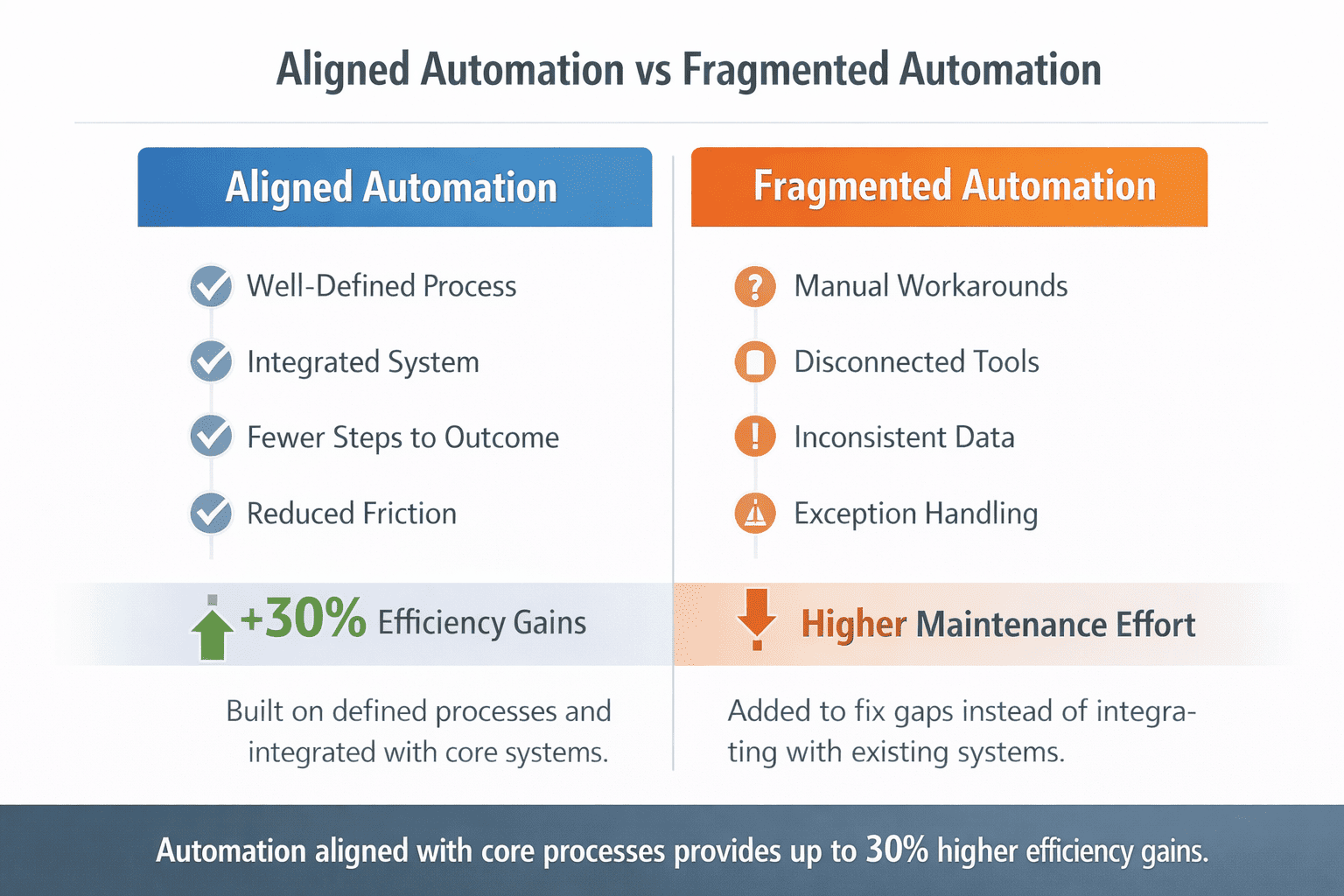
Adding More Tools Does Not Fix the Problem
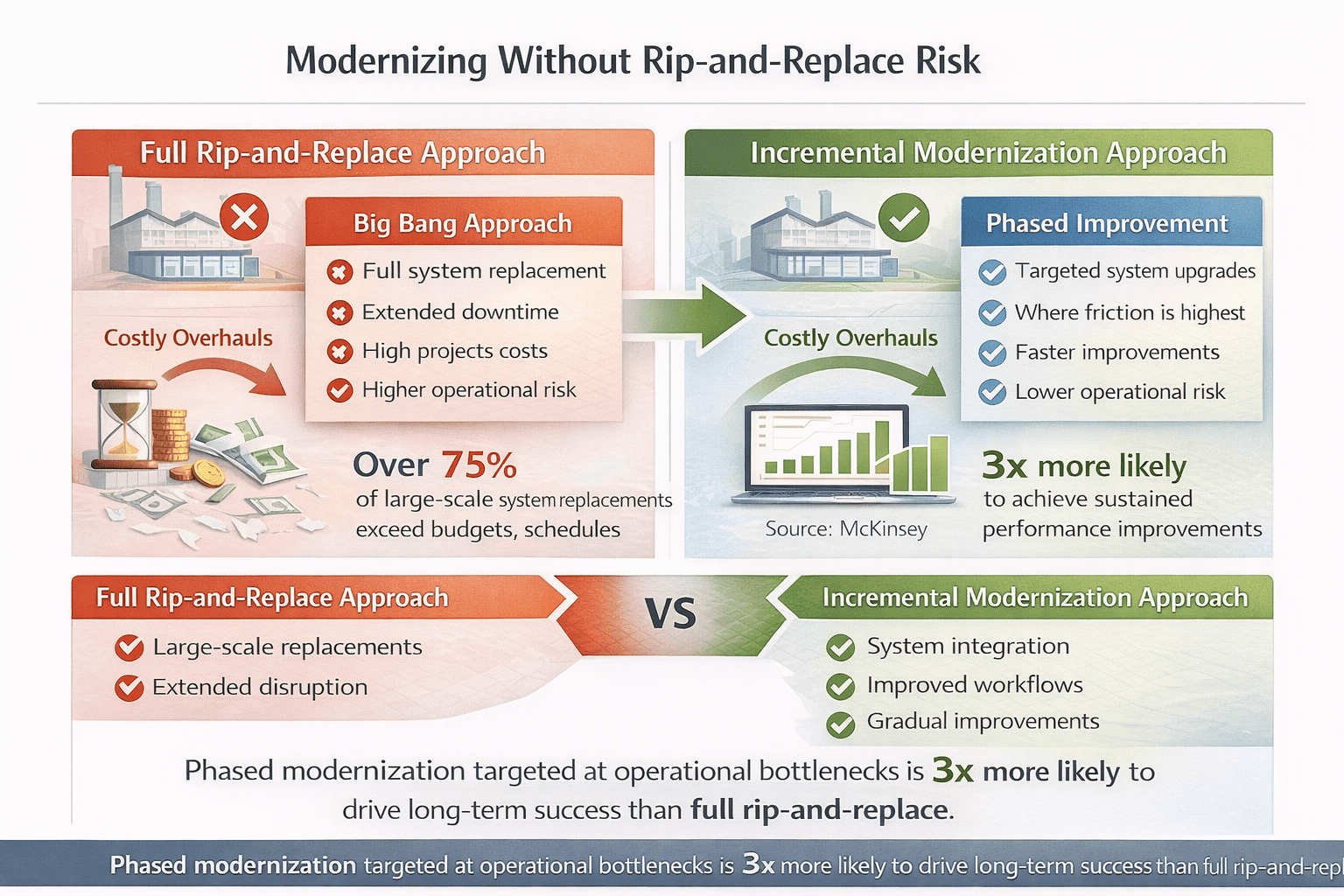
When friction increases, many organizations respond by adding new tools.
In practice, this often makes the problem worse. Each new platform introduces additional integrations, data inconsistencies, and ownership questions.
Instead of reducing friction, complexity increases.
Common indicators systems are limiting scalability:
-
Heavy dependence on spreadsheets for core workflows
-
Slow or inconsistent reporting across departments
-
Conflicting metrics between systems
-
Delays in customer communication or order processing
-
Increasing effort required to maintain existing platforms
These signals often appear long before financial impact is fully recognized. Left unaddressed, they compound into higher cost, slower execution, and increased operational risk.
Visual: Operational friction indicators caused by system fragmentation