
Key Highlights

  • Most redesigns improve the visual layer without changing the elements that determine whether a buyer converts

  • The average B2B website converts between 2 and 4% of visitors into leads, and most redesigns do not move that number

  • Redesigns that change too many variables at once make it impossible to identify what drove the outcome

  • Four redesign types consistently underperform: visual refreshes, rebranding without strategy, platform migrations that break SEO, and desktop-first builds for mobile audiences

  • The strongest redesigns define success in measurable terms before a single page is designed

Insight
A redesign does not prove itself by looking better. It proves itself when post-launch reporting shows measurable improvement against the baseline set at the start of the project.

Insight
The businesses that get real results from a website redesign treat it as a strategy and content exercise as much as a design one.


The pattern is consistent. A business invests in a redesign. The new site looks significantly better. The team is proud of it. Three months later, the leads have not increased. In some cases they have decreased.

This is not an unusual outcome. The site is now faster and better looking. Those are real improvements. They are just not the improvements that determine whether a buyer who lands on the homepage thinks this is for me, or closes the tab.

Why This Matters for 2026-2027

The average B2B website converts between 2 and 4% of visitors into leads. Most underperform even that modest benchmark. For businesses that have already done what they were told to do, built a website, invested in a redesign, ticked the digital presence box, the investment usually went into the wrong things.

The problem is structural. Most redesign projects begin with an aesthetic question: how do we make this look more modern? That question leads to a visual answer. And a visual answer applied to a site with weak messaging, unclear conversion paths, and no baseline data produces a site that looks better and still does not work.

Teams ask how do we make this look modern when they should be asking how do we make this convert better.

The Brief Is the Problem

Most redesign projects fail before a single wireframe is drawn. They fail in how the project is defined.

Leadership says the site looks outdated, or a competitor launched something impressive, or the branding feels stale. A designer is briefed. Mockups are produced. The team debates colors, typography, and hero imagery. What never gets asked is: which pages are currently generating leads, where are visitors dropping off, and what does a qualified visitor actually need to see before making contact.

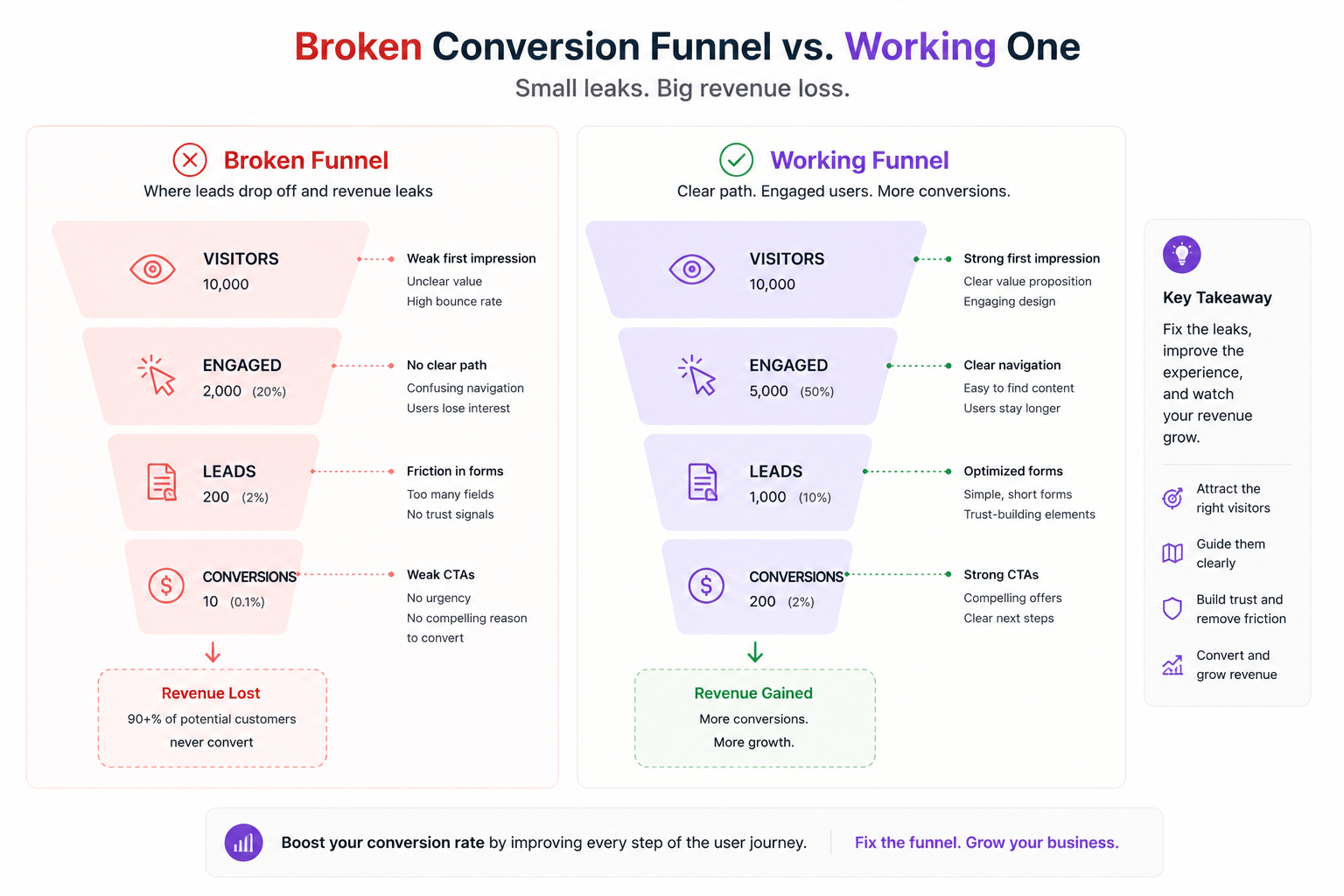
Too often redesigns begin with the assumption that new equals better. What is missing is a clearly defined strategy. Without benchmarks, success is vague. Teams may celebrate a visually impressive site while the conversion funnel remains leaky.

A redesign without a documented baseline is a redesign without a way to measure whether it worked.

Design Without Data Is Guesswork

The redesigns that consistently fail to improve commercial performance share one characteristic. They were built without analyzing existing performance data before changing anything.

Most B2B website redesigns fail to improve revenue because they treat the website as a design project instead of diagnosing the specific business bottleneck the site needs to solve.

Before a redesign begins, the data should answer several questions. Which pages are receiving traffic from high-intent sources? Where are visitors leaving without taking action? What content is currently producing inquiries? What are sales teams hearing from prospects that the website is not addressing?

Without those answers, design decisions are made on assumption. Some assumptions will be correct. Many will not. And without a documented starting point, there is no way to identify which changes helped and which made things worse.

When Everything Changes at Once

A second structural failure in most redesigns is scope. Navigation, headline copy, visual direction, page structure, calls to action, and contact flow all launch simultaneously.

Redesigns that change too many variables at once make it impossible to identify what drove the outcome, which compounds the misdiagnosis problem.

When the new site performs differently from the old one, and it almost always does, there is no way to attribute the change to any specific decision. If leads improve, the team does not know which element was responsible. If leads decline, the team cannot isolate the cause. The result is a site that cannot be optimized because its performance cannot be understood.

The businesses that consistently get measurable results from redesigns take a different approach. They change fewer things at once, establish review points at 30, 60, and 90 days after launch, and treat the post-launch period as an optimization phase rather than a project close.

The Website Is Not Separate From the Sales Process

One of the most consistent patterns in failed redesigns is that the web team and the sales team operate entirely independently. The redesign is treated as a marketing deliverable, not a commercial one.

Most website redesigns fail not because of budget or technology but because they are approached from the wrong angle. They are executed as creative projects, technical projects, or traffic projects, but rarely as revenue projects.

A website that is not connected to an understanding of how buyers actually evaluate and make decisions will not generate leads regardless of how well it is designed. The site needs to address the questions buyers are asking at each stage of their evaluation, surface the proof points that move decisions forward, and create a clear path to making contact. None of that is a design decision. It is a strategy decision that has to come before design begins.

Practical Implementation Guidance

The redesigns that produce measurable results share a consistent starting point: a clear definition of what success looks like in specific, documented terms before any design work begins.

That means establishing a baseline. Current conversion rate by key page, lead volume by traffic source, average session duration, and bounce rate on priority landing pages. These numbers become the benchmark against which every post-launch change is measured.

It means involving sales in the brief. The questions prospects ask before they buy, the objections that slow deals, and the content that earns trust are all inputs that should shape the site structure. A design team without access to that information is designing in the dark.

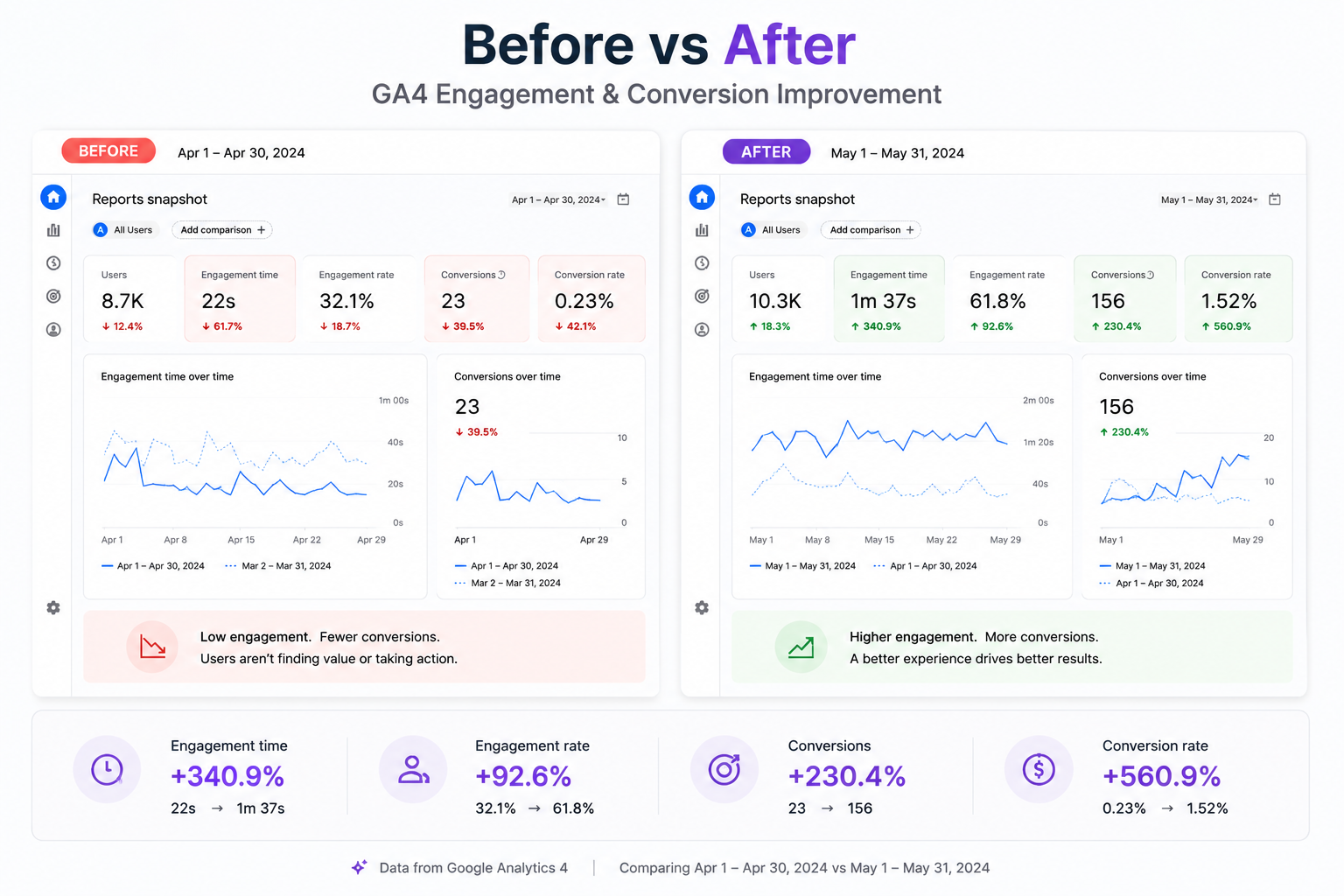
One company used a stepwise approach: redesign one product page, test it, learn, then roll learnings into the next. They achieved a 250% increase in leads before the redesign was fully complete. Starting with fewer changes and measuring each one produces both better results and a clearer understanding of what is actually working.

Conclusion

Most website redesigns fail not because the design work is poor, but because the project was framed as a design exercise rather than a commercial one. A site that looks better but was not built around how buyers actually evaluate and make decisions will not generate more leads. The visual layer improved. The revenue layer did not.

The redesigns that produce measurable results start with documented performance baselines, involve sales thinking from the beginning, change fewer variables at once, and treat launch as the beginning of an optimization process. The goal is not a better-looking website. It is a website that earns more revenue than the one it replaced.

Frequently asked questions

Most redesigns focus on visual improvement rather than conversion performance. A better-looking site does not automatically convert more visitors. Without addressing messaging clarity, conversion path structure, and the specific questions buyers need answered before making contact, the underlying performance problem stays unchanged.

Establish a clear baseline before launch: conversion rate by key page, lead volume by traffic source, and average session duration. Compare those numbers at 30, 60, and 90 days after launch against the documented starting point. Without a baseline, performance changes cannot be attributed to any specific change.

The brief should define specific business outcomes the redesign is expected to produce: target conversion rate, lead volume goals, and known performance problems to solve. It should also include sales input on buyer questions and objections, and a clear review cadence after launch. Aesthetic preferences alone are not a sufficient brief.

Yes. It is one of the most consistent patterns in post-redesign performance data. New sites frequently launch with lower conversion rates than the old site because the redesign prioritized visual improvement without preserving or strengthening the elements that were already producing leads.

The ones that work start with data, define success in measurable terms, involve sales and marketing thinking alongside design thinking, change fewer variables at once, and treat the post-launch period as an active optimization phase. The ones that do not treat the launch as the finish line.