
Key Highlights

  • AI-driven personalization uses machine learning to automatically customize what each visitor sees based on their real-time behavior and intent.

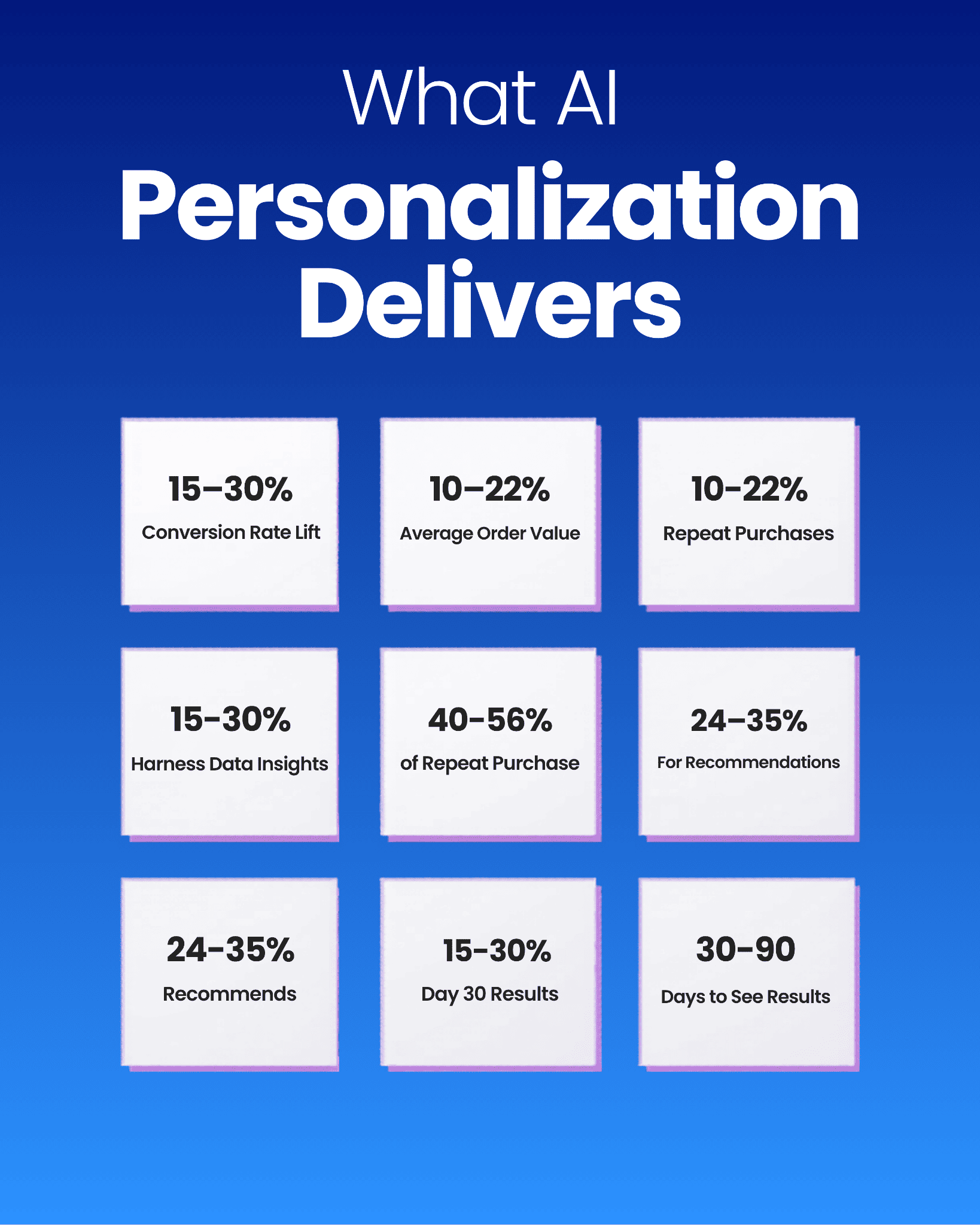
  • Ecommerce brands implementing effective personalization see conversion rate lifts between 15-30%, average order value increases of 10-22%, and repeat purchase improvements of 40-56%.

  • AI personalization scales revenue without requiring linear increases in sales staff or support teams.

  • The highest-impact implementation areas are homepage experiences for returning visitors, product recommendations, and abandoned cart sequences.

  • Personalization works when it reduces friction and guides decisions, not when it overwhelms visitors with irrelevant options.

  • Brands that treat personalization as core infrastructure, not a bolt-on feature, will gain competitive advantage in 2026.

Imagine this: traffic is up, but conversion isn't moving. You're spending more on acquisition, hiring more people to manage campaigns, and still watching potential revenue slip through the funnel.

The issue isn't volume. It's relevance.

Your site treats every visitor the same way. First-time browsers get the same homepage as repeat customers. Someone researching products gets the same CTAs as someone ready to buy. You're leaving money on the table because you're not showing people what they actually need when they need it.

AI-driven personalization fixes this. And heading into 2026, it's no longer optional for brands serious about growth.

What AI-Driven Personalization Means for Ecommerce

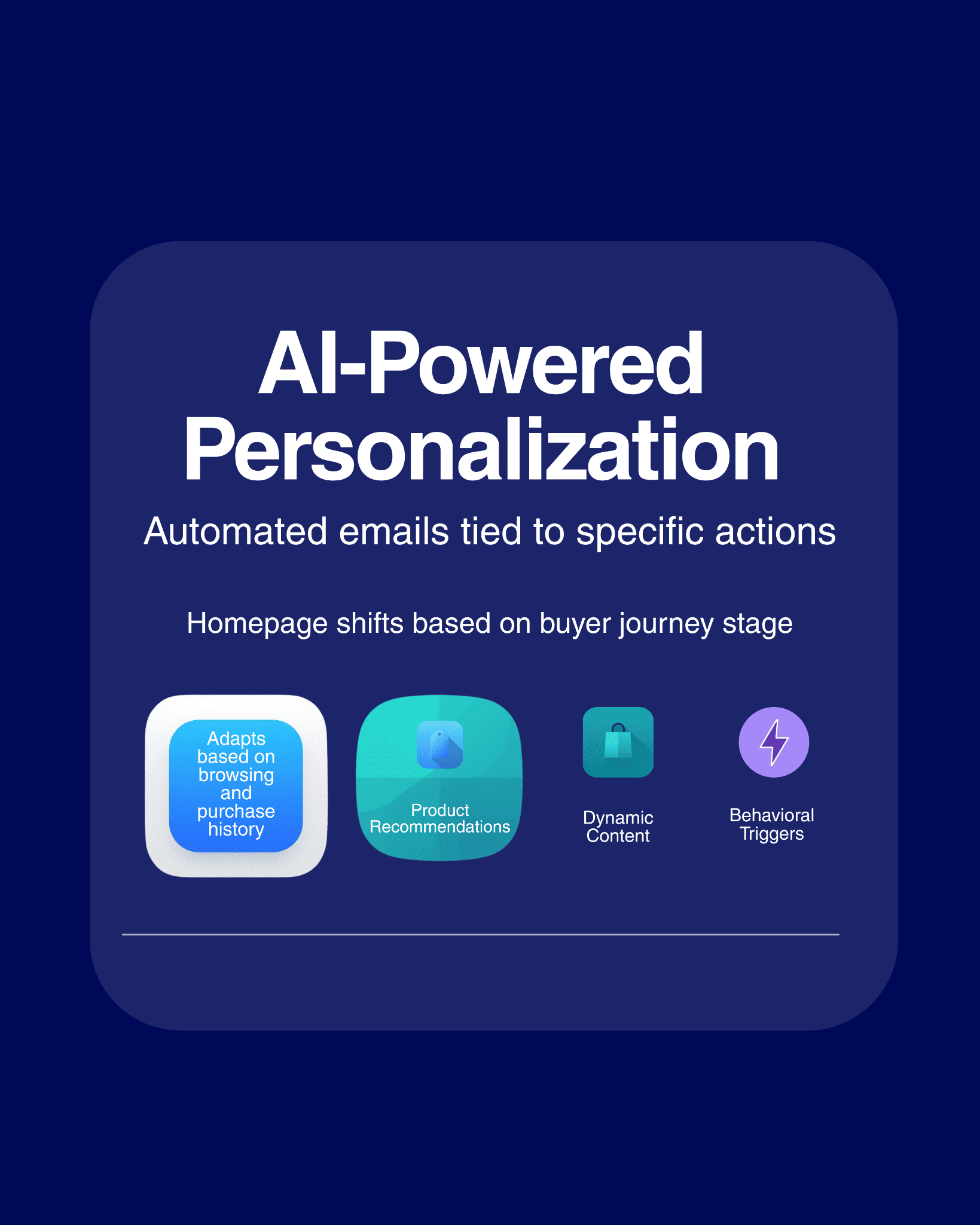
AI-driven personalization uses real-time behavioral data and machine learning to adapt what each visitor sees based on their intent, history, and session behavior. It's not static segmentation. It's not a guess based on demographics. It's dynamic content that shifts as your customer moves through their journey.

This shows up in three main ways:

Product Recommendation Systems

Product recommendations that adapt based on browsing patterns, purchase history, and what similar customers bought. Amazon built a significant portion of their revenue engine this way, estimates put personalized recommendations at 24–35% of total sales. That's not luck. That's systems working at scale.

Dynamic Content Adaptation

Dynamic website content that changes based on where someone is in the buying cycle. A first-time visitor sees educational content and category overviews. A returning visitor who abandoned a cart sees that product front and center with urgency messaging that actually makes sense.

Behavioral Trigger Automation

Triggered messaging tied to specific actions or lifecycle events. Abandoned browse emails. Re-engagement campaigns. Post-purchase sequences that drive repeat orders. All automated, all relevant, all tied directly to behavior.

Why This Matters More in 2026

Customer acquisition costs keep climbing. Paid channels are saturated. Organic reach is harder than ever. You can't just throw more budget at the problem and expect linear returns.

Because acquisition costs continue rising while conversion rates remain flat, personalization becomes the primary lever for profitable growth. The brands winning right now are maximizing revenue per session. They're squeezing more value out of every visitor without hiring more salespeople or support staff. AI personalization is how they do it.

Your cost to acquire a customer stays the same. Your revenue per customer goes up. That's the efficiency play.

The data backs this. Ecommerce brands implementing effective personalization see conversion rate optimization lifts between 15–30%. Average order values climb 10–22%. Repeat purchase rates improve by 40–56%. This means that for every 100 visitors who previously didn't convert, 15-30 additional visitors now complete purchases. These aren't projections. These are benchmarks from brands already doing this at scale.

But here's what most people miss: personalization only works when it reduces friction, not when it adds noise. Bad personalization overwhelms. Good personalization guides. The difference is intent recognition.

How Personalization Drives Revenue Without Adding Headcount

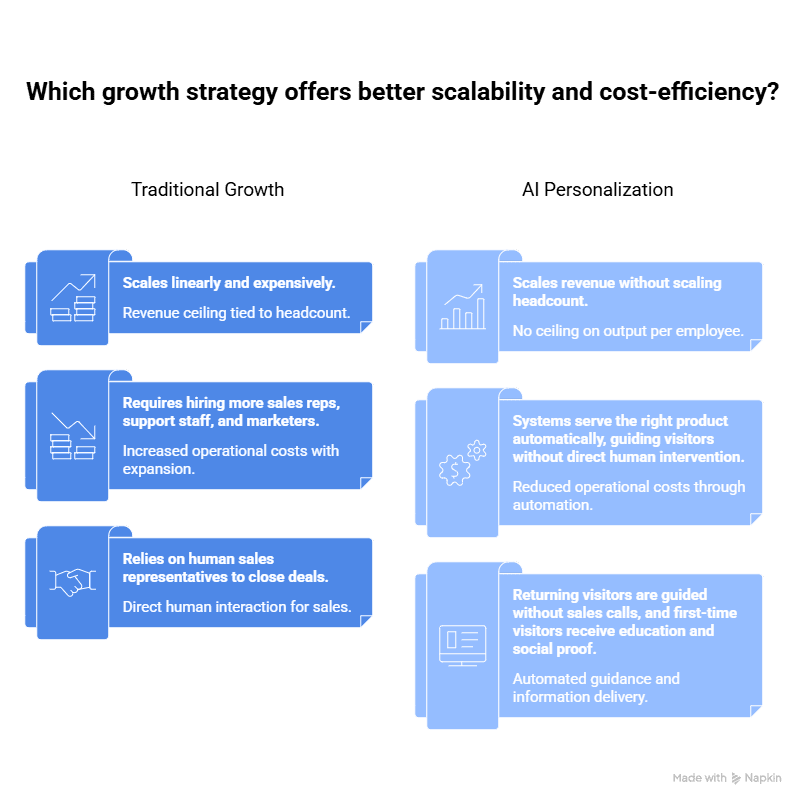
Traditional growth means hiring more people. More sales reps to close deals. More support staff to handle inquiries. More marketers to run campaigns. It scales linearly, and it's expensive.

AI personalization breaks that model.

When your site automatically serves the right product to the right person at the right time, you're replacing manual work with systems. A returning customer doesn't need a sales conversation; they need to see the product they were researching yesterday with a clear path to purchase. A first-time visitor doesn't need a hard sell, they need education and social proof.

Your AI handles that. Your team focuses on strategy, not repetitive tasks.

AI personalization systems increase output per employee by automating relevance decisions that previously required manual segmentation and campaign management.

You're getting more output from the same inputs. Your traffic converts better. Your customers spend more per order. Your retention improves because the experience feels tailored instead of generic.

The brands doing this well aren't running bigger teams. They're running smarter systems.

Implementation: What Ecommerce Leaders Should Prioritize

Start with the highest-impact touchpoints. Homepage experience for returning visitors. Product recommendations on category and product pages. Abandoned cart and browse sequences. These drive immediate, measurable results.

Don't overcomplicate it. The goal isn't to personalize every pixel. The goal is to remove friction at decision points and surface what's relevant when it matters.

Measure what counts: conversion rate by segment, average order value changes, and repeat purchase frequency. Vanity metrics don't matter. Revenue and efficiency metrics do.

The brands that win in 2026 will be the ones that treat personalization as infrastructure, not a feature.

It's not something you bolt on. It's how your entire ecommerce experience operates.

You're either building systems that scale revenue without scaling headcount, or you're competing on budget alone. One of those strategies has a ceiling. The other doesn't.

Conclusion

AI-driven personalization increases ecommerce conversion rates by 15-30% by automatically adapting content, recommendations, and messaging to individual visitor behavior in real time. Unlike traditional growth strategies that require linear increases in headcount, personalization systems scale revenue through automation. Implementation should focus on high-impact touchpoints: homepage experience, product recommendations, and behavioral triggers.

Frequently asked questions

Basic segmentation groups users by static traits such as demographics or past purchases. AI personalization adapts in real time based on live behavior, session signals, browsing patterns, and intent indicators. It continuously updates what a visitor sees instead of assigning them to a fixed category.

Brands typically see measurable improvements within 30 to 90 days when personalization is applied to high-impact areas such as homepage returning-user logic, product recommendations, and abandoned cart sequences. Conversion rate and average order value shifts often appear first.

No. Modern ecommerce platforms and personalization tools include built-in machine learning capabilities. The critical requirement is clean data, structured product catalogs, and clear behavioral tracking. Strategy and implementation discipline matter more than internal data science resources.

Overpersonalizing too early. When brands attempt to customize every element without clear intent signals, the experience becomes noisy and confusing. Effective personalization reduces decision friction rather than overwhelming visitors with options.

Yes. When customers consistently see relevant products, timely messaging, and contextual recommendations, repeat purchase rates increase. Personalization improves post-purchase engagement and lifecycle automation, not just first-session conversion.

Focus on revenue-linked metrics: conversion rate by returning vs new users, average order value shifts, revenue per session, and repeat purchase frequency. Engagement metrics matter only when they correlate directly with revenue impact.